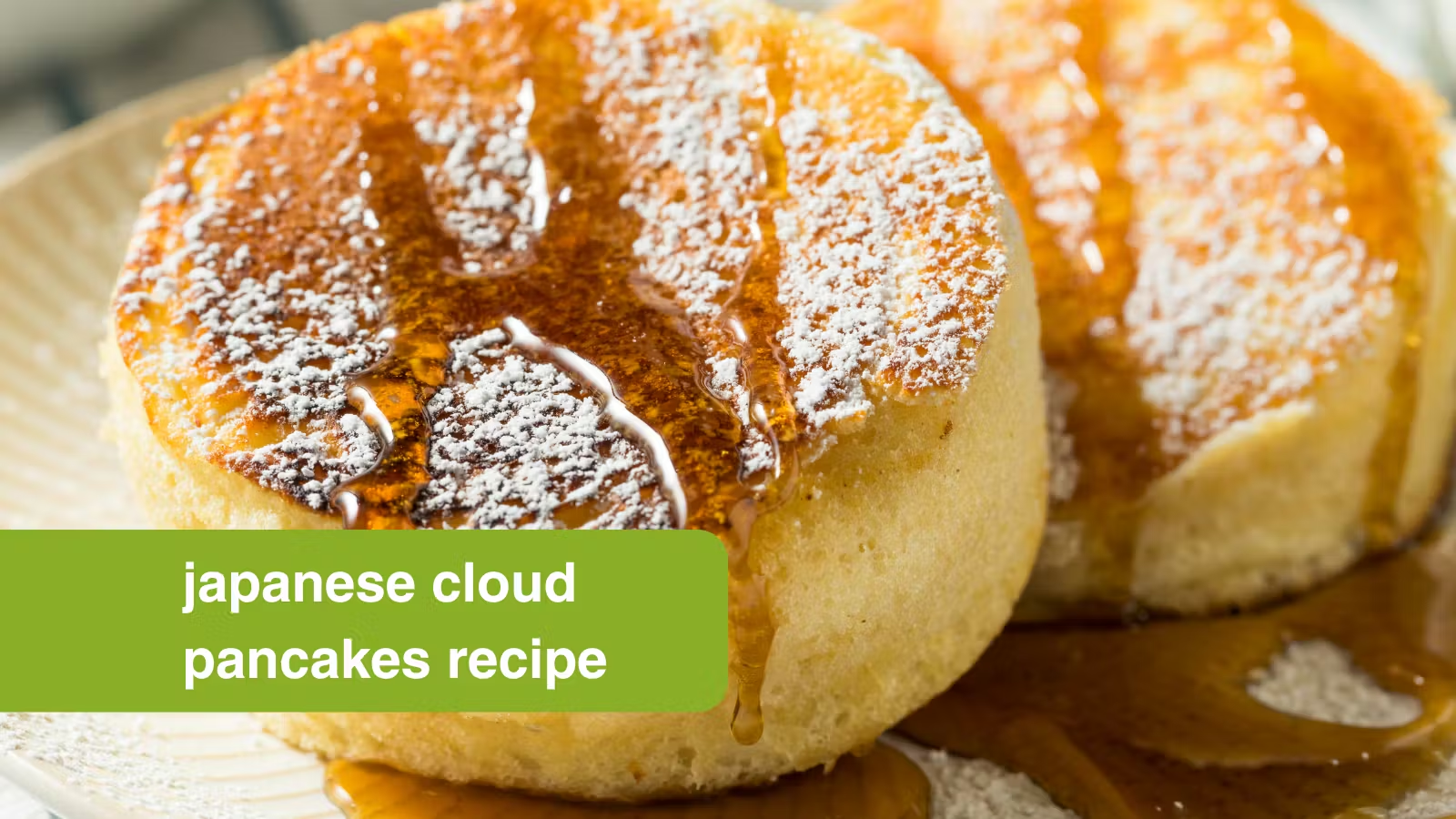
If you’ve ever scrolled through social media and felt a sudden craving for a towering, wobbling stack of breakfast art, you’ve likely encountered Japanese fluffy pancakes. Unlike their thin, dense Western cousins, these “soufflé pancakes” are defined by an ethereal lightness and a playful, gravity-defying bounce. But achieving that perfect texture isn’t just about luck; it’s a delicate dance of molecular science. In this guide, we dive deep into the chemistry behind that signature “jiggle,” exploring how simple ingredients like eggs and sugar transform into airy masterpieces. Whether you’re a home baker or a food science enthusiast, understanding the “why” behind the fluff will change your brunch game forever.
1. The Power of Protein Denaturation
At the heart of the jiggle is the egg white. When you whisk whites, you’re physically unraveling their proteins. These proteins then bond together to form a network that traps air bubbles, creating the foundational structure needed for a soufflé-like lift.
2. The Role of Air as a Leavening Agent
Unlike traditional pancakes that rely heavily on chemical leaveners, Japanese fluffy pancakes use air as their primary “lift.” The mechanical action of whipping creates millions of tiny air pockets that expand when exposed to the heat of the pan.
3. Achieving the Stiff Peak Stage
For the signature jiggle, the meringue must reach “stiff peaks.” This means the foam is strong enough to hold its shape when the whisk is lifted. If the peaks are too soft, the pancake will spread and lose its verticality.
4. Sugar’s Stabilizing Magic
Sugar isn’t just for sweetness; it’s a stabilizer. It dissolves into the water film around the air bubbles, preventing them from popping. This creates a fine, elastic texture that allows the pancake to wobble without collapsing instantly.
5. The Acid Factor: Cream of Tartar
Adding a pinch of cream of tartar (an acid) helps the egg proteins bond more tightly. This creates a more flexible and stable foam, ensuring the pancakes don’t “deflate” the moment they are removed from the heat.
6. The Fat Sabotage
Even a drop of egg yolk or oil can ruin the meringue. Fat molecules compete with proteins for space around the air bubbles but cannot hold the air. This is why a pristine, grease-free bowl is non-negotiable for that airy jiggle.
7. Gentle Folding Technique
Merging the yolk mixture with the whipped whites requires a “fold, don’t stir” approach. Over-mixing bursts the air bubbles you worked so hard to create. Use a spatula to gently cut through the center and lift.
8. Low and Slow Heat Transfer
Heat is the catalyst for the jiggle. Cooking at a very low temperature ensures the interior sets slowly. High heat would burn the exterior before the protein structure inside has a chance to stabilize the air pockets.
9. The Steam Chamber Effect
Adding a teaspoon of water to the pan and covering it with a lid creates steam. This moist heat keeps the pancake surface elastic, allowing it to expand upward freely rather than forming a crust too early.
10. The Physics of Vertical Growth
Because the batter is thick and air-rich, it stacks rather than spreads. The surface tension of the meringue helps the batter hold its cylindrical shape, which is essential for that iconic, tall, “jiggly” appearance.
11. Starch and Structural Integrity
A small amount of cake flour provides the “skeleton” of the pancake. The gluten development must be kept to a minimum to ensure the texture remains tender and soft, rather than chewy or bread-like.
12. The Cooling Contraction
As the pancake cools, the air inside shrinks. The “jiggle” is most prominent right out of the pan because the air is at its maximum expansion. Proper protein setting prevents the pancake from turning into a flat crepe.
13. Importance of Fresh Eggs
Fresh eggs have stronger protein bonds in the whites. Older eggs tend to be more watery, making it harder to create a stable, long-lasting foam that can support the weight of the pancake’s “body.”
14. The Role of the Egg Yolk
The yolk adds richness and acts as an emulsifier. It binds the small amount of flour and milk together, creating a smooth base that the meringue can be folded into without creating lumps.
15. Precise Timing for Flipping
Flipping too early leads to a mess; flipping too late results in a dry pancake. The ideal window is when the bottom is golden and the sides look slightly set but still look like they’re trembling.
16. Measuring by Weight
In the chemistry of baking, precision is king. Using a scale for flour and milk ensures the batter isn’t too heavy, which would weigh down the air bubbles and kill the bounce.
17. The Vanilla and Aroma Factor
While not part of the structure, vanilla masks the “eggy” smell often associated with soufflé-style dishes. It enhances the sensory experience, making the light, airy texture feel even more like a cloud-like dessert.
18. Understanding Coagulation
When egg proteins reach a certain temperature, they coagulate—meaning they turn from liquid to solid. This “sets” the walls of the air bubbles, turning a wobbly foam into a semi-solid, edible structure.
19. Using a Ring Mold vs. Freehand
Ring molds help concentrate the heat and force the batter upward. However, freehand scooping—stacking two or three scoops on top of each other—is the secret to the most natural, organic jiggle.
20. The Delicate Balance of Moisture
Too much milk makes the batter runny, while too little makes it tough. The perfect ratio ensures the pancake stays moist enough to feel “melt-in-your-mouth” while maintaining enough strength to stand tall.
SEO Meta Description
Learn the science behind Japanese fluffy pancakes! Discover how egg protein chemistry and steam create that iconic jiggle and airy texture in this food blog guide.
Focus Keywords
- Japanese fluffy pancakes
- Soufflé pancake science
- Egg white meringue tips
- How to make jiggly pancakes
- Pancake chemistry
- Fluffy pancake recipe tips
- Baking with meringue
FAQ Section
Q: Why do my Japanese fluffy pancakes deflate? A: Deflation usually occurs because the meringue wasn’t whipped to stiff peaks or the pancakes were undercooked. The protein structure needs enough heat to “set” so it can hold the air as it cools.
Q: Can I make these without cream of tartar? A: Yes, you can substitute it with a few drops of lemon juice or white vinegar. The goal is to provide acidity to stabilize the egg white proteins.
Q: Do I need a special pan for these? A: A standard non-stick skillet with a tight-fitting lid works perfectly. The lid is crucial for creating the steam required to cook the pancakes through without burning the bottoms.
Internal Linking Suggestions
- The Ultimate Guide to Perfect Meringue: How to master egg foam for any dessert.
- Breakfast Trends Around the World: From French crepes to Japanese soufflés.
- Essential Kitchen Science: Why temperature matters more than you think in baking.
Conclusion
Mastering Japanese fluffy pancakes is a rewarding journey into the heart of culinary science. By focusing on the stability of your meringue and the precision of your heat, you can transform basic pantry staples into a breakfast masterpiece. Remember, the secret to that legendary jiggle lies in the balance of air, protein, and steam. Now that you understand the chemistry, it’s time to grab your whisk and start flipping!
Leave a Reply